You upload. Three days pass, and the counter reads 47. That’s when the wondering starts, because you already know the next two weeks won’t move it much.
Nobody found the video. The content isn’t the issue. Most first uploads die the same way, and posting more of them doesn’t fix it.
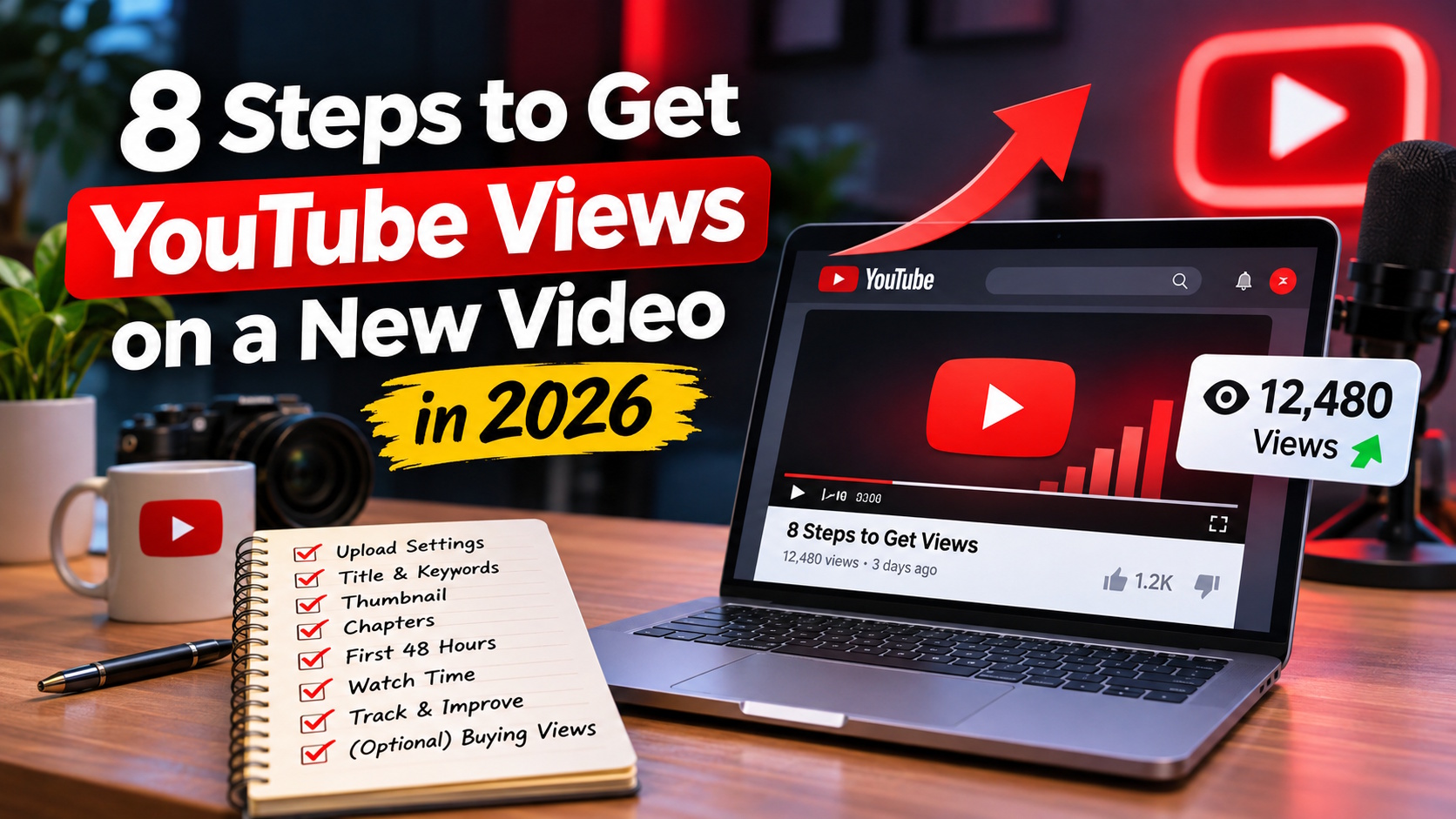
Eight steps move a video past that number. Not one of them needs a budget, and none need an audience you haven’t built yet.
Step 1: The Fast Path, and What Buying Views Actually Does
Weeks pass. A new video sits there, unwatched, and the algorithm has no reason to change that. Buying views skips the waiting.
The steps take two minutes. Pick a package. Paste the URL. Pay. Done. Delivery starts on its own.
Pacing decides whether the money does anything useful. When you purchase YouTube views from SocialWick for a video of your own, delivery is gradual, and the viewers are real people; sudden spikes are what get channels flagged.
A few days of steady arrival looks like a video finding its audience on its own. The whole block landing in an afternoon looks like what it is. That version shows up in YouTube’s review queue.
SocialWick has operated since 2017. Ninety days of free refills. Thirty days to get money back. 24/7 support. Checkout wants a URL and an email. Nothing more. A provider asking for login details is running a different kind of operation.
One limit worth naming. Bought views don’t make anyone watch the next video. Seven more steps cover that.
Step 2: Upload Settings That Matter
The details panel is where the upload gets set, and most people fill it in last. Flip that. Five settings in there lock in once the video goes live, and none of them can be changed afterward.
- Minimum 1080p, preferably 4K if the camera allows it. YouTube will compress two times, one when it comes in and once again when it comes out, both damaging a softer original.
- Keep to 16:9 unless the video is destined for the Shorts format. Video in vertical format uses a separate discovery system that doesn’t feed into the general discovery system, making the combination unhelpful for both sides.
- Subtitles are passed on to the automatic subtitle creator, where brand names, technical language, and any accents show up incorrectly. Many people watch videos on mute using the subtitles. Upload your own subtitle file.
- The publish time setting goes untouched by most creators. A 3 p.m. Tuesday upload lands while the audience is still at work. Evening or weekend gives the first hour more people to work with.
- That first hour gets weighed more heavily than any hour after it. Fill the panel in carelessly, and the video starts behind.
Step 3: Titles
Forty characters is the cutoff. Everything past that disappears on a phone, and phones are where most views land.
Say what the video is. “How I edited a 10-minute video in 40 minutes” gets it. “My editing workflow” doesn’t, because every channel on the platform could use that title. Numbers pull people in when they’re real. Seven settings is a promise. A hundred settings is a warning.
Then run the title through YouTube search before publishing. Nothing useful comes back, and the phrase is too obscure for anyone to look for.
Step 4: Thumbnails
1280 by 720. Under 2 MB. JPG or PNG. Those are the specs, and everyone gets them right. What most people get wrong sits on top of the file.
Three things earn the click. A face, since eyes go there first. Three or four words, no more. And contrast strong enough to survive a phone screen in daylight.
Test it out before uploading. Reduce the width of the thumbnail to 168 pixels and view it. If the words become jumbled up when it is reduced to that size, then that is how half your viewers would see it.
Wait for a week and then attempt another one. YouTube Studio conducts a thumbnail test on eligible channels, and normally, the winner is not the one that looked better on the desktop.
Step 5: Chapters
Chapters split a long video into pieces people can search for. They go in the description, timestamped and named.
Start at 0:00. After that, one chapter every two to four minutes. Name each one the way a viewer would type it. “How to brown butter” works. “The Butter Incident” doesn’t, unless someone is already a fan.
Google also picks up these timestamps. A cooking video with “How to brown butter” as a chapter can show up in search results for that phrase, which means the chapter does two jobs at once.
Step 6: The First 48 Hours
Two days. That’s the window. Miss it, and YouTube stops testing the video.
- First hundred views don’t have to come from strangers. Community tab. Email list. Discord. A group chat. Speed beats reach here.
- Answer every comment within two hours. Replies keep the thread alive for whoever scrolls past next.
- Pin a question. Questions pull replies; replies stretch the session.
- Retention graph, 30-second mark. A drop before 15 means the opening lost them. Bank the fix for the next video.
Step 7: Watch Time and Retention
A view is a click. Watch time is the click that stayed.
The decision comes in about a second. A frame, a face, a voice, and the thumb is already moving. That’s why the logo animation and the intro music kill the video before anyone sees it. Open on the thing they clicked for.
Then break the shot every minute or so. A cut. A zoom. A change of room. Static frames put people to sleep, and sleep closes the tab.
End with a doorway. End screens push to another video. A playlist keeps it playing after the first one finishes.
Step 8: Track What Changes
Stats checked on day three tell you nothing. The numbers haven’t settled, and YouTube is still testing.
Give it a week. Four figures appear in Studio. Impressions counts thumbnail views. Click-through turns those into a percentage. Average view duration says how many stayed. Subscribers gained is the only one that predicts the next video.
Compare these to your own past ten posts. Benchmarks on other channels cannot be compared as the audience is not the same. A rise from 2.5% click-through to 4% indicates a successful thumbnail.
Seven days before touching the title or thumbnail. Early changes reset signals still being read.
Day 14. Strong week one, push again. Playlist, community post, more views. Weak week one, the ceiling landed.
FAQ
The following questions will be asked more often on the checkout page as compared to the research stage.
At how many views will my video become popular?
It really depends; there is no set limit. While 200 subscribers might get you some visibility in 500 views, 50,000 subscribers may take up to 5,000 views. Just compare with your own last ten videos.
Do bought views hurt a channel?
Sudden spikes get channels flagged. Gradual delivery from real accounts behaves like organic growth. Check that the provider spreads delivery across days rather than minutes.
How fast do views appear after purchase?
Delivery begins almost immediately. YouTube analytics can take 24 to 48 hours, meaning that the public counter leads the analytics dashboard.
Can views be bought without giving up the password?
Yes. SocialWick requires only the video URL and an email address. A provider asking for login credentials is a red flag.
What happens if views drop?
A 90-day free refill covers drops within that window. A 30-day money-back guarantee covers the rest.
Does buying views replace the other seven steps?
No. Bought views give a video a starting audience. Retention, thumbnails, and titles decide whether that audience stays.
Final Thoughts
A video rarely fails because the content is weak. It fails because nobody clicked in the first place.
Buying views answers one question. How much does the empty-room stage cost you in momentum? It doesn’t answer what happens in month four, when the count looks healthy, and the comments still read silent.
Upload settings get the video launched. Titles and thumbnails earn the click. Chapters keep people past the two-minute mark, and retention carries the rest. The first 48 hours decide whether YouTube bothers looking twice.
Then comes the step most people skip. Pull up the stats, line this video against your last ten, and see where it landed. Weak first week? Give it another push in week three. Sometimes a video needs a second run at the feed before it catches.