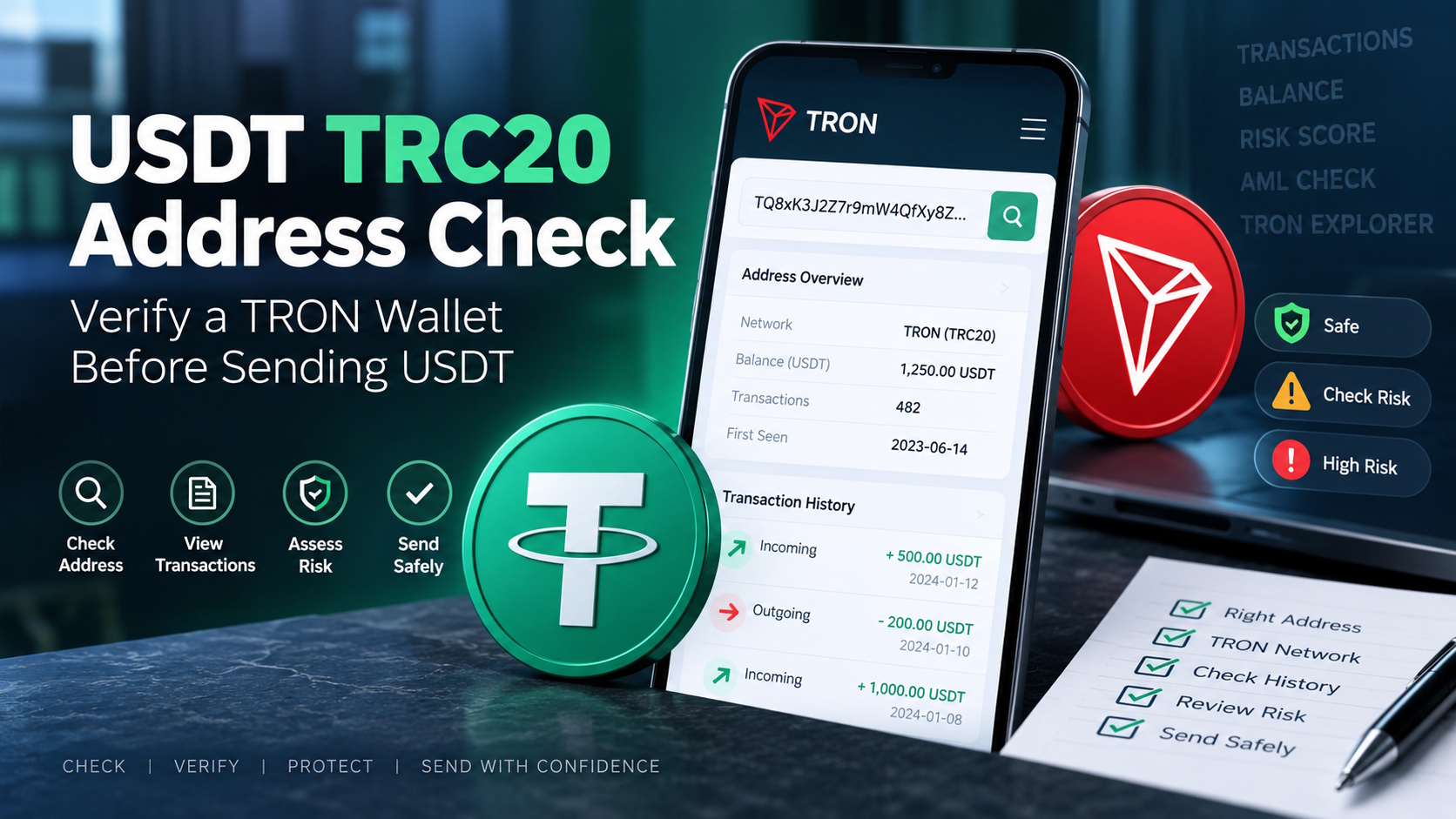
USDT is one of the most widely used cryptocurrencies for moving dollar-pegged value between wallets, exchanges, businesses, and individuals. On the TRON network, USDT is commonly sent as a TRC20 token because transactions are generally fast and the network fee can be relatively low. That convenience can also make people careless. A wallet address is easy to copy, a transfer takes only a few clicks, and once the transaction is confirmed, getting the money back can be extremely difficult.
That is why an usdt trc20 address check is worth doing before sending a substantial amount to an unfamiliar wallet. A wallet checker or TRON block explorer can reveal the address’s transaction history, token activity, and other useful information. It will not tell you with absolute certainty whether someone is trustworthy, but it gives you more information than simply looking at a string of letters and numbers.
What Does a USDT TRC20 Address Look Like?
USDT exists on several blockchain networks. The same USDT name can therefore refer to tokens operating on different networks, including Ethereum, TRON and others.
TRC20 USDT runs on the TRON blockchain. A normal TRON wallet address starts with the capital letter T, followed by a long sequence of letters and numbers.
For example:
Txxxxxxxxxxxxxxxxxxxxxxxxxxxxxxxxxx
That example is shortened and is only intended to illustrate the format. A real TRON address is longer.
The T at the beginning is a useful first check, but it is not enough on its own. The more important question is whether the address and network match the payment instructions.
Suppose an exchange gives you several withdrawal options for USDT. You might see TRON, Ethereum and other networks listed separately. If the recipient is expecting TRC20 USDT, the TRON network needs to be selected. Sending through the wrong network can create a recovery problem even when the wallet address was copied correctly.
For larger transfers, do not treat the network selection as a technical detail. It is part of the payment itself.
How to Check a TRON Address
You do not need blockchain development experience to investigate a TRON wallet. Public blockchain data can be viewed through explorers and specialized address-checking services.
Start by copying the complete wallet address and entering it into the search field. The results can typically show the address’s balance, token transfers and transaction history.
Look at the Address Activity
The transaction history is often the most useful place to start.
A wallet that has been active for months may have a long list of incoming and outgoing transfers. You can see when transactions occurred and, depending on the explorer, which tokens were involved.
You do not need to understand every transaction shown on the page. Look for information relevant to the payment you are about to make.
For example, if somebody claims that an address is their regular business wallet but the address was created recently and has almost no activity, that may be worth asking about.
Likewise, if you are paying an individual and they suddenly provide a completely different address from the one used earlier in the conversation, stop and confirm the change.
Check for USDT Transfers
A TRON address can hold TRX and many different TRC20 tokens. Seeing activity on a wallet does not necessarily mean that it has handled USDT.
Look specifically for Tether USD (USDT) transfers when checking an address intended to receive USDT.
The transaction history can also help you understand whether the address has previously received funds from other wallets and whether it has been actively moving USDT.
Again, transaction history is context, not proof of legitimacy. A wallet can have perfectly normal-looking activity and still belong to an unknown person or business.
Verify the Amount and Destination
It is easy to become focused on the wallet address and overlook the actual payment details.
Before pressing the final confirmation button, compare:
- The recipient’s wallet address
- The selected network
- The USDT amount
- Any withdrawal fee
- The recipient’s expected amount
- The destination platform or wallet
For a high-value payment, it is also sensible to confirm the address through a second channel. If payment instructions arrive by email, for example, a quick confirmation through a known phone number or another established contact method can prevent a costly mistake.
What Is AML and Crypto Address Risk Scoring?
AML means Anti-Money Laundering. Cryptocurrency exchanges, payment providers and blockchain analytics companies use AML systems to identify transactions that may require additional scrutiny.
These systems can examine blockchain activity and relationships between addresses. Depending on the provider, risk categories can include stolen funds, scams, ransomware, sanctions exposure, fraud, darknet activity and other sources of potentially suspicious cryptocurrency.
A risk score is best understood as an indicator, not a final judgment.
For example, an address may receive funds from another wallet that has previously interacted with a flagged address. That creates a form of exposure, but it does not necessarily mean the current wallet owner knowingly participated in any wrongdoing.
Different blockchain analytics providers can also produce different results because their databases, classifications and scoring methods are not identical.
For an ordinary USDT user, the practical takeaway is simple: if a wallet produces a serious risk warning, do not ignore it simply because the address looks valid.
Why Can an Exchange Freeze a USDT Deposit?
This is one of the reasons people are sometimes surprised by cryptocurrency compliance checks.
You might receive USDT from another person and assume that the exchange will simply credit your account because the transaction is valid on the blockchain. The blockchain confirms that the tokens moved. The exchange, however, may perform its own compliance checks before allowing unrestricted use of those funds.
The exchange may examine the transaction and its previous blockchain activity. Cryptocurrency does not always move directly from the original sender to the final recipient. Funds can pass through several wallets before arriving at an exchange.
If the exchange’s monitoring system identifies an exposure it considers significant, the deposit may be flagged for review.
The result can vary. The exchange might accept the deposit without interruption, temporarily restrict withdrawals, request information about the source of funds, or refer the transaction to its compliance team.
This does not automatically mean that the customer has done anything wrong. It means the transaction has triggered a risk-control process.
For traders and businesses moving larger amounts of USDT, understanding this distinction is important. A blockchain transaction being confirmed does not guarantee that an exchange will immediately make the funds available for withdrawal.
5 Things to Check Before Sending USDT TRC20
A quick verification routine can eliminate many common mistakes.
1. Make Sure You Are Using the TRON Network
Confirm that the recipient accepts USDT TRC20.
On your exchange or wallet, select TRON as the network. Do not choose a network based solely on the fact that the recipient’s address looks like a cryptocurrency address.
2. Compare the Full Wallet Address
Copy the address instead of typing it manually.
Then compare the copied address with the original payment instructions. For an important transaction, do not rely only on the first and last few characters.
If you have any reason to suspect that the payment details may have changed, contact the recipient using a trusted communication method.
3. Search the Address
Run the wallet through a TRON block explorer or address checker.
Look at recent transactions, USDT transfers and other available blockchain information. This takes little time and can reveal whether the wallet has an established history.
4. Review Risk or AML Information
If the address checker provides risk information, read the result before proceeding.
A warning does not necessarily establish that the wallet is fraudulent. It does, however, give you a reason to pause and investigate the transaction rather than sending the money immediately.
This becomes more important when the payment is large or the recipient is unknown to you.
5. Send a Test Transaction for Large Payments
A small test transfer can be useful when you are dealing with a new wallet, exchange or business.
Send a modest amount first, wait for confirmation, and ask the recipient to verify that it arrived. Once the details have been confirmed, send the remaining balance.
A test transaction is not practical for every payment, but for a large transfer it can be a relatively inexpensive additional safeguard.
Common Mistakes When Sending USDT
Many crypto payment problems are not caused by complicated blockchain issues. They are simple human errors.
One common mistake is selecting the wrong network. Another is copying an outdated address from an old conversation. People also sometimes verify only the first few characters of an address, assuming that is enough.
There is another problem worth considering: address replacement malware. Some malicious software can monitor the clipboard and replace a cryptocurrency address after you copy it. If you paste an address and immediately send the funds without checking it, the transaction may go somewhere completely different.
For that reason, checking the address immediately before confirming the transaction is a good habit.
Frequently Asked Questions
How do I check a USDT TRC20 address?
Copy the complete TRON wallet address and enter it into a TRON block explorer or a dedicated USDT/TRC20 address checker. Review the wallet’s transaction history, USDT activity and any available risk information.
How can I tell whether an address is TRC20?
TRON addresses generally begin with T. However, the address format alone does not confirm that the recipient wants USDT TRC20. Always confirm the network with the recipient before sending.
Can a USDT TRC20 transaction be canceled?
Once a blockchain transaction has been confirmed, the sender generally cannot reverse it. If you send USDT to the wrong wallet, recovery usually depends on the owner of that address or the service controlling it.
What does a crypto risk score mean?
A risk score summarizes information about an address or its transaction exposure according to a particular analytics provider. A high score is a warning sign, not necessarily proof that the wallet owner is involved in criminal activity.
Why would an exchange investigate my USDT deposit?
An exchange may investigate a deposit when its compliance systems identify potentially risky transaction history or exposure to addresses associated with certain categories of activity. The exchange may request additional information before releasing the funds.
Is checking an address enough to guarantee a safe transaction?
No. Address checking is one part of transaction security. You should also verify the recipient, payment instructions, network, amount and source of the address. For large payments, consider a small test transaction.
Final Thoughts
USDT TRC20 makes moving digital dollars relatively straightforward, but the convenience of a fast blockchain transfer should not encourage rushed payments. A few minutes spent checking the destination can provide useful information about where the wallet has been and how it has been used.
For an unfamiliar recipient, the safest approach is straightforward: verify the address, confirm TRON/TRC20, inspect the transaction history, review available risk information, and use a test payment when the amount justifies it.
There is no blockchain tool that can guarantee a transaction will never cause a problem. What an address check can do is give you more information before the money leaves your wallet. For an irreversible payment, that information can be valuable.