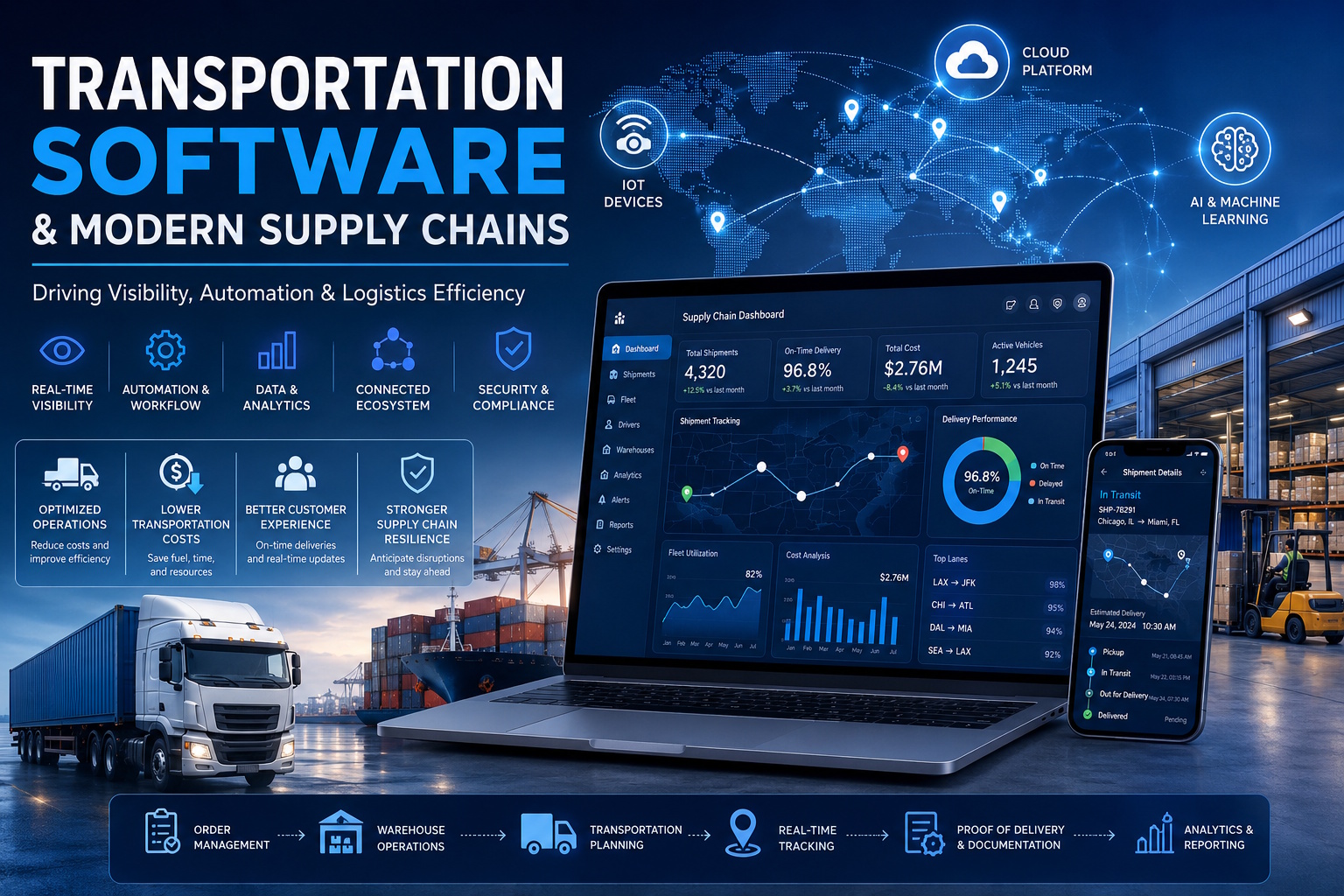
Supply chains are under constant pressure to become faster, more transparent, and more resilient. Businesses must manage increasingly complex logistics networks while meeting customer expectations for real-time updates, reliable deliveries, and seamless service. In this environment, operational efficiency is no longer enough – companies need intelligent technology that helps them adapt quickly to changing conditions.
To address these challenges, many organizations invest in custom solutions developed by a specialized transportation software development company. Software vendors with experience in logistics and supply chain technologies, including companies like Wezom, help businesses build platforms that improve visibility, streamline transportation processes, and support data-driven decision-making across the entire supply chain.
Why Traditional Supply Chain Management Is No Longer Enough
For many years, supply chains operated using disconnected systems and manual processes. Information was often spread across spreadsheets, emails, phone calls, and multiple software platforms that rarely communicated effectively with one another.
While these approaches may have worked in simpler business environments, modern supply chains require a much higher level of coordination. Customers expect rapid deliveries and complete transparency throughout the fulfillment process. At the same time, businesses must manage rising transportation costs, changing regulations, inventory fluctuations, and increasing competition.
Without access to accurate, real-time information, organizations struggle to respond quickly to disruptions and inefficiencies. Transportation software addresses this challenge by creating a centralized environment where data, workflows, and stakeholders remain connected.
Transportation Software as the Foundation of Modern Supply Chains
Transportation software plays a critical role in connecting different parts of the supply chain. Rather than treating logistics as an isolated function, modern platforms integrate transportation activities with inventory management, warehouse operations, procurement, and customer service.
This integration allows organizations to gain a comprehensive view of their operations. Decision-makers can track shipments, monitor fleet performance, analyze delivery timelines, and identify potential bottlenecks from a single platform.
As supply chains become more dynamic, transportation software helps businesses move from reactive management to proactive planning.
Improving Visibility Across the Entire Logistics Network
One of the most significant challenges in supply chain management is the lack of visibility. Delays, inventory shortages, and operational inefficiencies often remain hidden until they begin affecting customers or business performance.
Modern transportation platforms provide real-time insights into logistics operations, enabling businesses to monitor activities as they happen. This visibility allows organizations to identify potential problems early and take corrective action before disruptions escalate.
When all stakeholders have access to accurate information, communication improves significantly. Transportation teams, warehouse managers, suppliers, and customer service departments can coordinate more effectively and make decisions based on the same data.
The result is a more agile and responsive supply chain capable of adapting to changing market conditions.
The Role of Automation in Supply Chain Optimization
Manual processes continue to create inefficiencies in many logistics operations. Tasks such as shipment scheduling, route planning, reporting, and status updates often consume valuable time and resources.
Transportation software helps automate these activities, reducing administrative workloads and improving consistency across operations.
For example, modern platforms can automatically:
- Assign deliveries to available vehicles
- Calculate optimal routes
- Generate transportation documentation
- Track shipments in real time
- Notify customers about delivery updates
By automating routine tasks, businesses can reduce errors, improve productivity, and allow employees to focus on higher-value activities.
Automation also supports scalability. As transportation volumes increase, organizations can handle greater workloads without significantly expanding administrative teams.
Leveraging Data for Better Decision-Making
Data has become one of the most valuable assets in supply chain management. Every shipment, delivery, vehicle, and warehouse activity generates information that can be used to improve performance.
Transportation software transforms this data into actionable insights by collecting, organizing, and analyzing information from multiple sources.
Instead of relying on assumptions, businesses can make decisions based on measurable performance indicators such as:
- Delivery accuracy
- Fleet utilization
- Transportation costs
- Route efficiency
- Driver performance
- Customer satisfaction metrics
Access to these insights helps organizations identify opportunities for optimization while supporting continuous improvement initiatives.
Emerging Technologies Reshaping Transportation Software
The capabilities of transportation platforms continue to expand as new technologies become available.
Artificial Intelligence and Machine Learning
Artificial intelligence is helping businesses analyze large volumes of operational data more effectively. AI-powered systems can identify patterns, forecast demand, and recommend improvements that may not be immediately visible through traditional analysis.
Machine learning algorithms continuously improve their accuracy over time, enabling transportation platforms to optimize routes, predict delays, and improve resource allocation.
These capabilities allow organizations to become more proactive in managing supply chain operations.
Cloud Computing
Cloud-based transportation software offers flexibility and scalability that traditional on-premise systems often struggle to provide.
Organizations can access critical logistics data from any location, support distributed teams, and expand operations without significant infrastructure investments. Cloud environments also simplify maintenance and ensure that software remains up to date with the latest features and security standards.
Internet of Things (IoT)
Connected devices are becoming increasingly important in transportation management. Sensors, GPS trackers, telematics systems, and smart equipment continuously generate operational data that can be analyzed in real time.
This connectivity improves asset tracking, fleet visibility, and overall supply chain performance while helping businesses respond more quickly to changing conditions.
Predictive Analytics
Rather than simply reporting what has already happened, predictive analytics helps organizations anticipate future events.
By analyzing historical and real-time data, transportation platforms can forecast potential disruptions, maintenance requirements, and capacity constraints before they affect operations. This allows businesses to make proactive decisions that reduce risk and improve reliability.
Why Custom Transportation Software Delivers Greater Value
Many organizations initially adopt commercial transportation management systems. While these platforms provide useful functionality, they are often designed to meet the needs of a broad audience rather than the specific requirements of individual businesses.
Every supply chain operates differently. Factors such as industry regulations, operational workflows, customer expectations, and technology environments vary significantly from one organization to another.
Custom transportation software allows businesses to create solutions tailored to their unique processes. This approach improves usability, enhances efficiency, and enables deeper integration with existing systems.
Custom development also provides greater flexibility as business requirements evolve. New features, integrations, and workflows can be added without being constrained by the limitations of pre-built software products.
Building Supply Chains That Are Ready for the Future
The future of supply chain management will be defined by agility, connectivity, and intelligence. Businesses that continue relying on fragmented systems and manual processes may find it increasingly difficult to compete in a rapidly changing market.
Transportation software provides the foundation for more resilient and adaptable supply chains. By combining automation, analytics, real-time visibility, and system integration, organizations can create logistics networks that respond quickly to disruptions while maintaining operational efficiency.
As technologies such as AI, IoT, and predictive analytics continue to mature, transportation platforms will play an even greater role in helping businesses navigate complexity and seize new opportunities.
Conclusion
Modern supply chains require more than efficient transportation. They depend on accurate data, seamless communication, intelligent automation, and the ability to make informed decisions in real time.
Transportation software has become a critical tool for achieving these goals. By investing in custom solutions, businesses can improve visibility, optimize operations, strengthen collaboration, and build supply chains that are better prepared for future challenges.
As digital transformation continues to reshape logistics, organizations that embrace advanced transportation software will be well positioned to improve performance, reduce costs, and maintain a competitive advantage in an increasingly connected global marketplace.