A decade ago, talking to a machine and getting a useful answer back felt like a party trick. Today it happens every time someone asks Siri for directions or calls a support line and reaches a bot instead of a human.
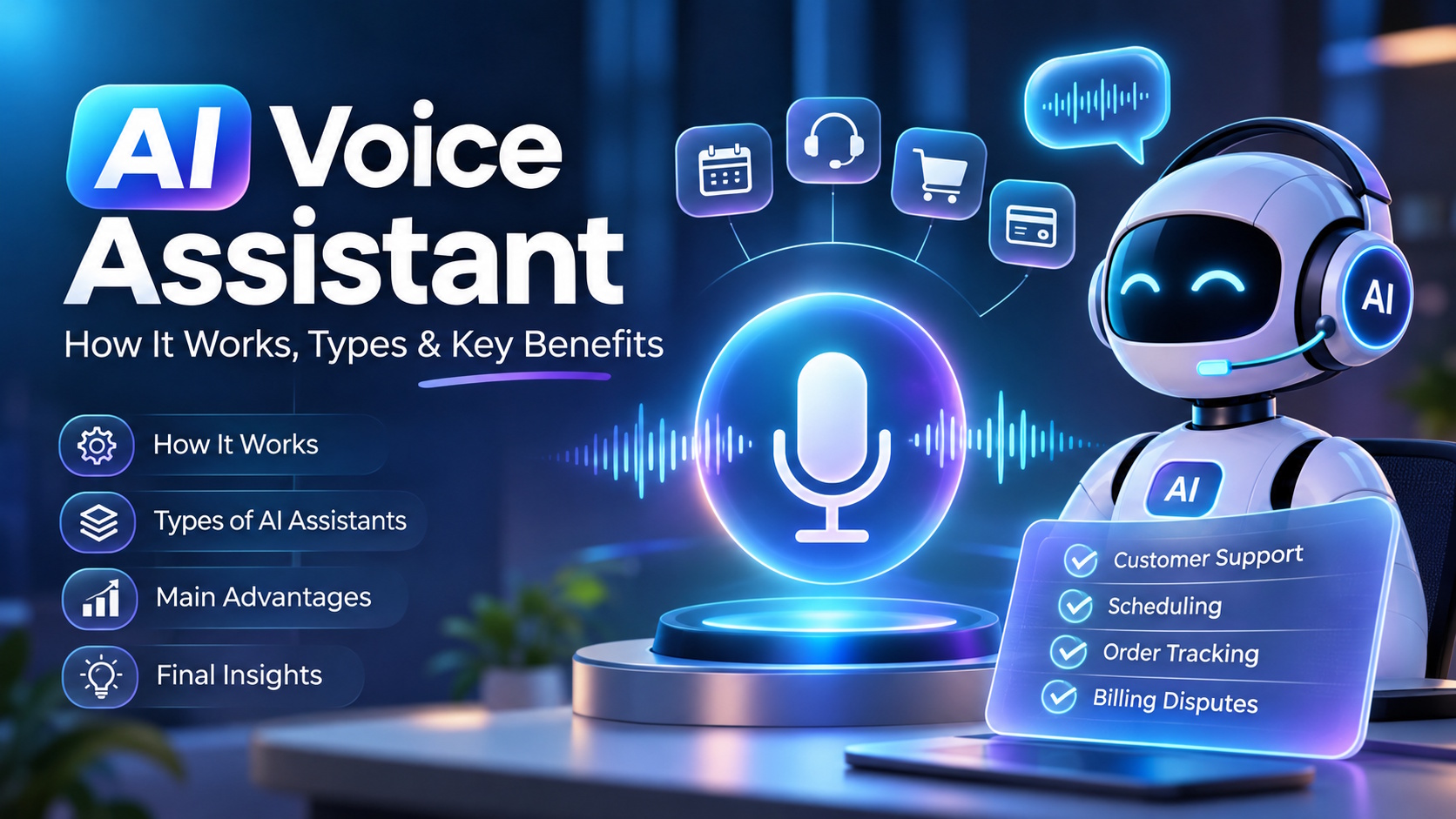
AI voice assistant software now handles real business work: customer support, scheduling, order tracking, even billing disputes. This guide covers what an ai voice assistant actually is, how the technology works under the hood, the main types of AI assistants in use today, and the advantages they bring to both businesses and everyday users.
What is an AI Voice Assistant?
An ai based voice assistant is a software program that understands spoken language and replies to it, often in a natural-sounding voice of its own. Instead of pressing buttons or typing commands, a person talks, and the system listens, processes the request, and answers back.
Consumer products such as Siri, Alexa, and Google Assistant are the most familiar examples of a voice ai assistant. The same underlying technology also runs business tools that handle support calls, book appointments, and manage internal workflows without a human picking up the line.
What separates a modern voice ai assistant from the old dial-1-for-sales phone tree is genuine language understanding. Older systems matched fixed phrases to fixed menu options, so anything a caller said outside the script caused the call to fail or get transferred blindly. A generative ai voice assistant interprets meaning instead, handles follow-up questions, and adjusts its replies based on context. As Infobip notes in its breakdown of the technology, AI Voice assistants have matured from basic command-followers into sophisticated conversationalists.
Reaching that level of conversation usually takes more than an off-the-shelf bot. Most businesses end up working with AI chatbot development services to fine-tune the assistant around their own call flows, product catalog, and customer data before it ever goes live.
How AI Voice Assistants Work
Every interaction with an ai voice assistant software product runs through the same sequence, even though the whole exchange takes a fraction of a second.
1. Speech-to-Text
The assistant records the spoken audio and converts it into written text, a process commonly called automatic speech recognition. This step has to hold up across different accents, speaking speeds, and background noise.
2. Natural Language Processing
Converting audio to text only gets the system halfway there. NLP analyzes that text to figure out what the caller actually wants. It identifies the intent behind the request and pulls out specific details, such as:
- Dates and times
- Names
- Account or order numbers
- Product or service references
These details tell the assistant exactly what to do next.
3. Algorithms and Machine Learning
Trained models decide how to interpret ambiguous phrasing, correct for misheard words, and refine their output over repeated interactions. The more conversations a system processes, the better it gets at recognizing how people actually talk, rather than how a script assumed they would.
4. Real-Time Execution
Once the assistant understands the request, it decides what to do with it. A basic bot might pull a pre-written answer from a list. A more capable setup with ai assistant voice capabilities can query a database, check an account balance, or update a booking on the spot.
5. Integration with Platforms and Apps
None of this matters without access to the systems that hold relevant data. A useful voice assistant typically connects to:
- CRM platforms for customer history
- Calendar and scheduling tools
- Payment processors
- Inventory or order management systems
Without these connections, a voice assistant can talk, but it cannot act on what it hears.
6. Text-to-Speech
Finally, the system converts its written response back into spoken audio. Neural text-to-speech engines have come far enough that synthesized voices now carry intonation and emotion, which keeps conversations sounding like a conversation instead of a recording.
Types of AI Assistants
Not every AI assistant is built for the same job. Here are the main categories worth knowing.
1. Voice Assistants
Built for hands-free interaction, these rely on speech recognition to handle tasks like setting reminders, checking the weather, or controlling smart home devices. Apple Siri, Amazon Alexa, and Google Assistant are the best-known examples.
2. Conversational Chatbots
Mostly text-based, these tools show up in customer support and service environments, answering routine questions through chat windows on websites and inside apps.
3. Generative AI Assistants
Powered by large language models, these go beyond task automation. They draft emails, write code, summarize documents, and generate original text on request. ChatGPT and Claude are the most recognized names in this category.
4. Autonomous AI Agents
These plan, reason, and execute multi-step tasks with little human input. Instead of just answering a question, an autonomous agent works through the steps needed to complete the task behind it.
5. Productivity and Workplace Assistants
Built into enterprise tools, these manage scheduling, summarize meetings, draft reports, and pull data from internal systems, cutting down on repetitive administrative work for employees.
Main Advantages of AI Assistants
The shift from rule-based bots to AI-driven assistants brings four advantages worth highlighting.
Time & Cost Savings
Voice and chat assistants absorb large volumes of routine requests without adding headcount. Labor makes up 60 to 70 percent of total call center operating costs, so handling first-line conversations through automation cuts overhead directly and frees staff for the cases that actually need a person.
Improved Personalization
A well-integrated assistant pulls up account history, past orders, or stated preferences in real time. That turns a generic interaction into one shaped around the specific customer, rather than a scripted reply that fits everyone the same way.
Enhanced Safety
Voice biometrics and pattern analysis flag suspicious requests before a transaction goes through. For sensitive interactions involving banking or healthcare data, this adds a layer of identity verification a basic keypad system was never built to provide.
Personalized Experiences
Beyond a single call, modern assistants carry context across sessions, channels, and devices. A customer who starts a request by phone and finishes it through chat does not have to explain the issue twice, since the system passes the relevant details along.
Final Thoughts
AI voice assistants now combine speech recognition, language understanding, and real system access to manage tasks that once required a person on every call, from booking a doctor’s appointment to resolving a billing dispute. Businesses that get this right tend to treat voice as one more channel in a broader support strategy, not a standalone gadget bolted onto an existing call center.